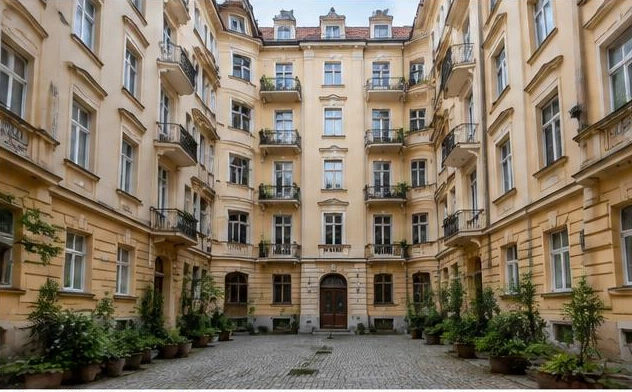
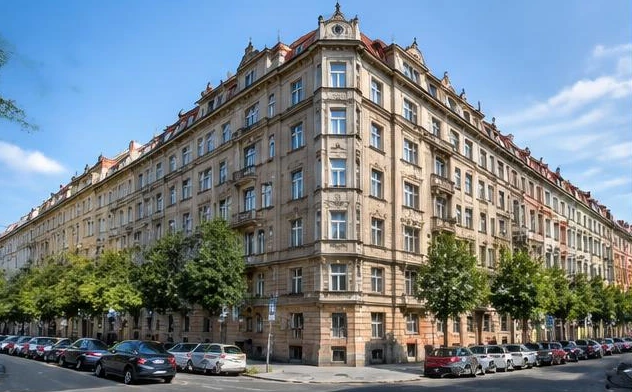
Selling a tenanted apartment building in Prague: prepare documents, assess pricing, avoid hasty tenancy changes and choose an agent with a personal approach.
A tenanted apartment building can be sold. What matters is not occupancy alone, but documented income, tenancy terms, the owner's costs and the building's legally feasible potential. The sale itself does not terminate residential tenancies. For owners, the most effective starting point is therefore preparing documentation, not promising that a buyer can easily obtain vacant possession of every apartment.
Perhaps you own a building in Vinohrady, Žižkov, Karlín or Nové Město. Some apartments have older agreements, some rents are below current levels, and the roof needs repairing. Should you invest first, change the tenancies or sell as things stand? This guide will help you distinguish real value from wishful thinking and compare offers so that the highest figure is not simply the starting point for subsequent price reductions.
If you are considering the sale of an apartment building in Prague, see how an off-market sale works step by step.
Prague · Owners of rental and apartment buildings
You are not just selling floor space. You are selling income, rights and reliable documentation.
- Tenancies
- Do not automatically end on sale
- Price
- Current income is not the same as future potential
- Offer
- Assess the amount alongside the terms and financing
An independently authored decision guide as of 28 November 2026. Calculations are illustrative, not a price map of Prague or a valuation of any specific building.
Selling a tenanted apartment building: what the buyer actually takes over
When a property is sold, the rights and obligations arising from its tenancies pass to the new owner under Section 2221 of the Czech Civil Code. For an apartment in which the tenant lives, a change of ownership is not grounds for termination (Section 2224). The Czech Ministry for Regional Development explicitly explains that a sale alone does not require a new tenancy agreement or an amendment. It is advisable to notify tenants of the change in writing and provide clear payment instructions.
An indefinite-term tenancy agreement is not, in itself, a defect in the building. For an investor seeking long-term income, a stable tenancy can be an advantage. For a buyer planning extensive refurbishment, those same tenant rights are a significant constraint on the schedule. This is not about universally “good” or “bad” tenants, but about how well the legal position fits the buyer's strategy.
Include all amendments, side agreements, termination notices, disputes and the actual use of the premises in your overview. Do not confuse apartments, non-residential premises and accommodation units: their permitted use and legal regime may differ. A lawyer should assess the specific agreements and any exceptions before the sale; a sales presentation alone cannot do this.
What affects the price of an occupied building in Prague
Price per square metre is useful for comparison, but it is not a complete valuation. For a rental building, at least three questions must be distinguished: what the building earns today, what it could earn after feasible changes, and the prices at which genuinely comparable buildings transact. RICS distinguishes between the market, income and cost approaches and emphasises selecting the method according to the asset type and purpose of the valuation. This does not mean that every valuation must be a simple average of three results.
| Documentation | What the investor needs to understand | What can distort the expected price |
|---|---|---|
| Rent | Contractual amounts, actual receipts and payment history | Including service charge advances in income |
| Agreements | Duration, amendments, indexation and the owner's obligations | Assuming that all rents can be increased immediately |
| Technical condition | Operating costs and necessary future investment | A roof repair omitted from the budget |
| Floor areas and use | Lettable areas and the permitted use of the premises | Comparing a basement or attic with a completed apartment |
| Development | Verifiable feasibility and conversion costs | Treating an unverified attic conversion as completed value |
| Transaction | Legal structure, liabilities and transfer terms | Comparing a property price with an ownership-interest price without adjustments |
Prague 1 to 10 is not a single homogeneous market. Buildings within the same neighbourhood can differ in their immediate location, noise exposure, layouts, ground-floor commercial space, technical condition and refurbishment restrictions. A map of apartment rents therefore cannot be used, without further adjustments, as a price map for sales of entire buildings. Relevant completed transactions matter more than simply comparing listings; RICS guidance addresses data verification and comparability in detail.
Illustrative calculation: why a small change in assumptions changes value by millions
A simplified income model starts with net operating income, known as NOI. In this example, that means annual rent less an assumed allowance for vacancy and non-payment and the owner's operating costs. We exclude loan repayments, income tax and a one-off major refurbishment. These items do not disappear: the investor must account for them in further calculations.
Educational scenario · Not a specific building that has been sold
From rent to net operating income
- CZK 4 800 000
- Annual contractual rent excluding service charge advances
- CZK 240 000
- Assumed annual loss from vacancy and non-payment
- CZK 960 000
- Annual operating costs borne by the owner
NOI = 4 800 000 − 240 000 − 960 000 = CZK 3 600 000 per year.
The amounts and yields below are selected educational assumptions. They are not measured market data for Prague.
Under simple capitalisation of stable income, the indicative value is calculated as NOI divided by the yield. For a building with changing rents, phased refurbishment or variable costs, a multi-year cash flow model may be more appropriate. In the following table, we change just one assumption and keep everything else constant. The yield is not the rent level: it expresses the relationship between net annual income and capitalised value. The rates of 2.5%, 3% and 3.5% illustrate the model's sensitivity, rather than a verified market range for all Prague buildings.
| Illustrative yield | Calculation | Result before further adjustments |
|---|---|---|
| 2.5% | 3 600 000 / 0.025 | CZK 144 000 000 |
| 3.0% | 3 600 000 / 0.03 | CZK 120 000 000 |
| 3.5% | 3 600 000 / 0.035 | Approximately CZK 102 857 143 |
The difference is not proof that you should automatically reduce your price. It raises the question of why the buyer is using that particular yield. Ask for an explanation: what risk does it reflect, what comparisons support it, and is the same repair being counted twice? Conversely, a higher valuation based on unrealistically low risk may be little more than a marketing figure.
In the same simplified model, an increase in sustainable net income of CZK 120 000 per year at a 3% yield represents a difference of CZK 4 000 000 in capitalised value. This applies only if the other assumptions remain unchanged. It is not a promise of a higher sale price or an argument for unlawful changes to tenancies.
Is it worth increasing rents or obtaining vacant possession before selling?
Read the agreements first. An agreed inflation clause, an agreement with the tenant and the statutory procedure are not the same thing. Where rent increases are neither otherwise regulated nor expressly excluded, the procedure under Section 2249 of the Czech Civil Code includes conditions concerning comparable customary rent and a limit on the proposed increase over the preceding three years. The Ministry for Regional Development also describes the deadlines for the tenant's consent and any subsequent application to the court. This does not establish a right to increase every rent immediately to the price in a new listing.
My starting recommendation to an owner before selling is this: do not change tenancies simply because you are preparing to market the building. First prepare the documentation and establish a sales strategy. Until you know the specific buyer and their investment plans, you cannot know which changes would genuinely help them. An investor seeking long-term income may value stable agreements and payment history. A buyer planning refurbishment, subdivision of apartments or sales of individual units may need a different timetable and different contractual terms.
A new long-term agreement, tenancy extension or poorly negotiated amendment can create a commitment that the future owner would not have accepted themselves. This can narrow the pool of buyers, complicate their plans and weaken your position in price negotiations. Nor is obtaining vacant possession of an apartment automatically an advantage: it may facilitate building works, but it also means lost income and potentially the cost of reaching an agreement with the tenant. An intention to sell is not, by itself, grounds for termination.
Prepare an overview, not new commitments. Maintain proper management of the building, fulfil your obligations to tenants and address urgent defects. Make strategic tenancy changes only after an individual commercial and legal assessment of their benefits. Advice against hasty changes before a sale does not mean postponing maintenance, overlooking arrears or ignoring statutory deadlines.
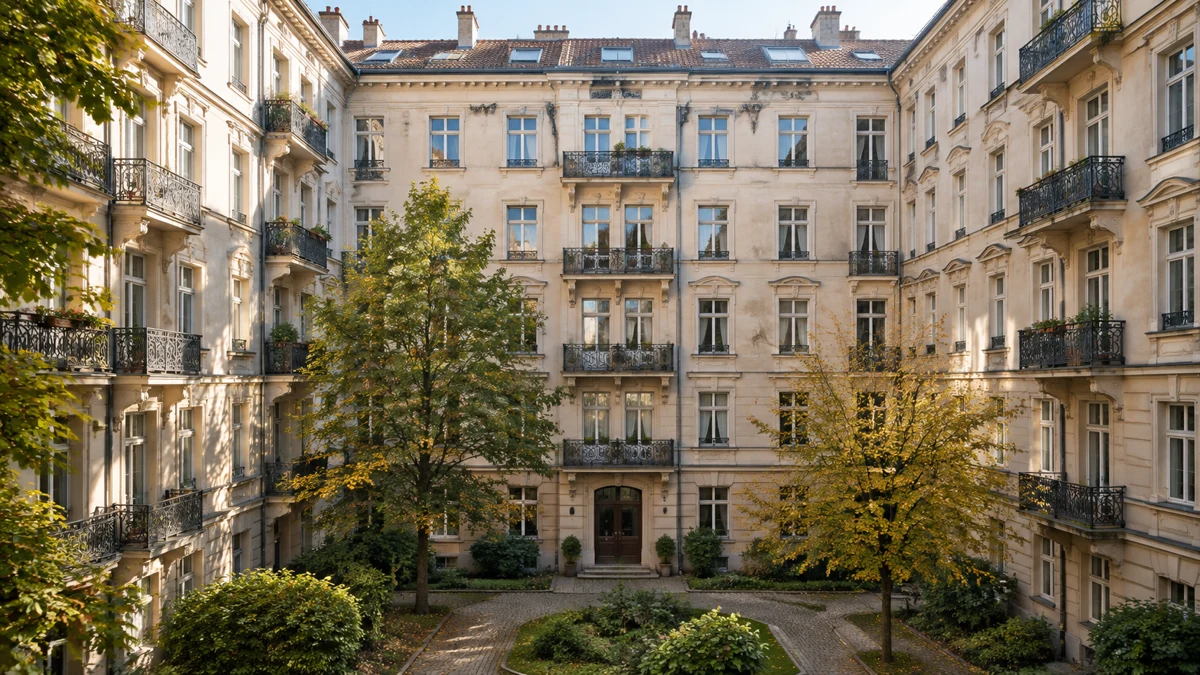
Twelve sets of documents to prepare before the first offer
You do not need to have everything ready on the day of the first discussion. You do, however, need to know what exists, what is missing and who will obtain the missing documents. The following list is a practical framework; the precise scope of due diligence varies according to the building and the transfer structure.
- Ownership and restrictions. A current Land Register extract, acquisition documents and associated land, mortgages, easements and any proceedings.
- Schedule of rental premises. Identification of each apartment or space, verified floor area, permitted use and occupancy.
- Tenancy agreements and amendments. Including side agreements, indexation and the owner's contractual obligations.
- Rent schedule. Contractual rent, actual receipts and service charge advances shown separately, ideally for the last 12 months.
- Deposits and obligations to tenants. Records of security deposits held, related obligations and how these will be settled on transfer.
- Receivables and disputes. Rent arrears, instalment agreements, termination notices and ongoing proceedings, without concealing problems.
- Operating costs. Management, insurance, maintenance, real estate tax and other expenses actually borne by the owner.
- Technical documentation. Available documents, inspection reports and an overview of repairs and known defects.
- Future investment. A budget for necessary repairs, their urgency and a distinction between these and optional development.
- Energy performance and use. The building energy performance certificate (PENB) and documents relating to permitted use, to the extent required for the transaction.
- Development potential. If you have previously considered extending or altering the building, prepare any existing studies, plans, design documentation and permitting documents. These include building permits, for example for subdividing apartments or adding residential units in the attic. Such documents can help an investor assess the building's possibilities. Their currency, validity and applicability must be verified; a study alone is neither a permit nor a guarantee of a higher sale price.
- Structure and handover. Sale of the property or an ownership interest, loans, consents, tax assessment and a plan for handing over management.
When ownership of a company is transferred, the property is not transferred in the same way as in a direct property sale: the buyer acquires an ownership interest and must also investigate the company, its liabilities and its accounts. Do not therefore compare a building sale and a sale of an ownership interest solely by the amount offered. I discuss the details in the article what an SPV is and how it relates to property.
How to sell discreetly while protecting tenants' data
Discretion does not mean concealing defects or promising that nobody will find out. It means controlled disclosure: an anonymised overview of the building and rents for an initial assessment, relevant documents for a qualified prospective buyer, and more detailed documentation with restricted access for transaction due diligence.
Share personal data only to the extent necessary and on an appropriate legal basis. A confidentiality agreement does not, by itself, replace data protection requirements. In an inspection of a real estate agent, the Czech Office for Personal Data Protection (ÚOOÚ) documented a breach of the data minimisation principle. That case is not a ruling on our sales model, but a concrete reminder that providing real estate services does not authorise unrestricted data collection or sharing.
Agree in advance on communication with tenants, viewing arrangements and continuity of management after the transfer. You can find process details in the guide to off-market property sales.
Read also
I own an apartment building in Prague and want to sell it on Sreality.cz
The highest offer may not deliver the best actual outcome
A high offer with unresolved financing conditions and a lengthy due diligence period may be less acceptable than a lower offer with clearly established financing. This does not mean automatically prioritising speed over price. It means requesting comparable information and deciding on the entire package of terms.
| Question for the buyer | What to request in writing |
|---|---|
| What exactly are you buying? | Identification of the properties or ownership interest and the liabilities included |
| What is the price? | The amount, any applicable VAT treatment and precisely defined price adjustments |
| How will you fund the purchase? | Evidence of financing at an appropriate stage, not merely an expression of interest |
| What other conditions apply to the purchase? | The scope and deadline for due diligence and the procedure for addressing findings |
| When will the funds be released? | The timetable, escrow arrangements and release conditions |
| How will you take over the building? | Tenancies, deposits, receivables, service charge reconciliations and management |
Do not let your sale be governed by the vague statement “we will finalise the price after due diligence”. Genuine new findings may justify negotiations, but facts already known should be available to the buyer in good time. Better-prepared documentation can reduce uncertainty. On its own, however, it cannot guarantee a particular purchase price or completion of the transaction.
Who should handle your apartment building sale: choose a person and a strategy, not just a brand
Think carefully about whom you entrust with selling your apartment building. You are not simply choosing advertising. You are choosing the person who will protect your negotiating position and personally lead one of the most significant asset transactions of your life. A well-known agency name, dozens of claimed sales or the highest promised price do not, on their own, tell you how much attention your particular building will receive.
The highest promise is not the highest achievable price
It is natural for an owner to be attracted by a high figure. What matters, however, is whether it can be justified to an investor by actual income, the building's condition, tenancy obligations and feasible development. Ask what supports the recommended price, which buyers it makes sense for and how the agent will respond to specific objections. A figure without calculations and a commercial plan may be more about winning the instruction than providing a considered route to a sale.
A building marketed at a price unsupported by its documentation and target investors may remain on the market for months. In the narrowly defined segment of Prague apartment buildings, the same offer may repeatedly reach the same prospective buyers. They may then ask why it remains unsold and start to view it as a persistently unsaleable listing. This does not automatically mean a decline in the building's value, but it can weaken your negotiating position and increase pressure for a discount. A high initial asking price is therefore no guarantee of higher final proceeds.
Who will personally focus on your building?
A large agency may have strong resources and excellent specialists. A smaller agency or independent agent is not automatically a better choice. What matters is the individual, their capacity and their way of working. Find out who will actually lead the instruction, how many comparable sales they are handling at the same time and whether you will deal directly with them. Your building should not be just another portfolio entry waiting for someone to respond to an advertisement.
A mass newsletter can be a supporting tool, but it does not replace personal outreach to a suitable investor. The agent should know who makes the purchase decision, what type of building the investor wants, whether they seek stable income or redevelopment, and what their financing conditions are. More important than the size of a database is the ability to explain why your particular building matches a specific investment brief.
The owner's decision
Do not entrust your building to the highest promise. Entrust it to a defensible strategy.
Ask for an explanation of the price, personal accountability and the route to specific buyers before signing an agency agreement.
- Who will personally lead my sale? The name of the responsible agent, their experience with entire buildings and the extent of their other instructions.
- How will you justify the recommended price? An overview of assumptions, comparable transactions and the difference between today's income and future potential.
- Which investors will you approach, and why? Buyer types and how their strategies fit the building, not disclosure of confidential names without consent.
- Do you directly know the people who make the purchase decisions? The approach to personal outreach, verification of current requirements and follow-up communication.
- How will you prevent uncontrolled circulation of the offer? Rules for sharing, approving presentation materials and protecting documentation.
- What happens if the offer receives no response? An agreed review process, reports to the owner and strategy adjustments supported by feedback, rather than repeated price cuts alone.
Another sign of good service is an agent's ability to explain an unwelcome fact objectively and refuse to promise an outcome they cannot substantiate. The aim is neither to undervalue the building nor to sell at any cost. It is to create a defensible offer, give the building individual attention and negotiate with buyers whose strategies and resources align with your objective.
How I prepare an apartment building sale for an owner
My approach starts with your objective: do you want to release capital, stop managing the building, resolve co-ownership or identify the right time to sell? I then connect the overview of the building and its tenancies with a commercial strategy and coordination of specialist due diligence. Legal, tax and building-technical conclusions belong to the relevant specialists; commercial leadership should translate them into a clear decision, not replace them.
When selecting a buyer, a specific investment brief matters more than the size of a contact list. An investor seeking stable rental income is not the same as one focused on refurbishment followed by sales of individual units. The Private Investors Club enables work with defined buyer requirements. Neither membership nor a network contact is a promise of an offer for every building.

Maria Kopřivová · Personally managed sales
Your building needs a strategy that reflects its actual condition.
Are you dealing with tenancy agreements, document preparation or an investor's offer? Send me the basic details of the building and your objective. Do not submit confidential agreements or tenants' personal data in the initial form.
Discuss selling my building · Selling apartment buildings in Prague
Questions owners ask before selling
Do I have to evict tenants before selling?
No. A building can be sold with tenants in place, and tenancies generally continue when ownership changes. For residential tenancies, the sale alone is not grounds for termination. The starting recommendation is not to change tenancies solely because of a sale before establishing the sales strategy. New commitments may not suit the future buyer's plans. Assess any changes individually with a lawyer and maintain proper management of the building.
Is a building with indefinite-term tenancies unsaleable?
No. Income, the legal position and the target buyer are what matter. A restriction on refurbishment plans may be a disadvantage for one investor, while a stable tenancy may suit another's strategy.
Can I use the price per square metre of apartments that have sold?
As one indicative reference, not as a direct valuation of the entire building. You must account for tenancies, condition, floor areas, costs, time and the feasibility of any subdivision and sale of individual units. An apartment's asking price does not automatically translate into an achieved price for a building.
How long does it take to sell an apartment building in Prague?
Without knowing the building and the terms, it is not possible to promise a single timeframe honestly. The schedule depends on documentation, the tenancy and legal position, the buyer's financing, the scope of due diligence and the consents needed for the transfer. Distinguish between preparation, offer selection, signing and payment of the purchase price.
Which documents should I prepare first?
Start with a schedule of premises and rents, agreements with their amendments and a current Land Register extract. These three sets of documents alone can help reveal the difference between the income presented and what the buyer actually takes over.

Complimentary personal consultation
Facing a similar situation? Let's discuss it.
Every property and every sale is different. Write me a few lines and I will suggest a concrete next step.
- I reply personally, never an assistant or call centre
- Discretion and confidentiality from the first word
- Concrete recommendations instead of generic advice
Author
Maria Kopřivová
Strategic investment real estate partner for Prague and Costa Rica. Specializes in off-market apartment building sales and development projects in Guanacaste. Background at the Embassy of the Republic of Costa Rica in Prague, quoted by ČTK, e15, and Newstream.cz.