Purchasing land in Costa Rica can be an excellent investment opportunity, whether you are considering a residential project, a vacation home, or a larger…
Planning to buy land in Costa Rica and build a private villa, apartment complex, or boutique hotel?
Recently, an increasing number of investors have reached out to me looking to purchase land in my native Costa Rica to build a family residence, holiday accommodation, apartments, or a hotel. While this is an exceptionally attractive opportunity, the process of selecting and purchasing land involves rigorous, specific requirements. Without in-depth local knowledge, you can easily expose yourself to unnecessary risks and costly mistakes.
I would like to share key insights on what to focus on when selecting land in Costa Rica, what documents and permits you will need, what must be thoroughly verified, and how to ensure your investment step is completely secure.
If you are planning to purchase investment land in Costa Rica, having a comprehensive understanding of legal regulations, zoning restrictions, environmental conditions, and local procedures is absolutely essential. This process can be challenging for foreign investors because practices targeting less-informed buyers who place unquestioning trust in local sellers or intermediaries unfortunately do exist.
WHO THIS ARTICLE IS FOR
This guide is designed for investors and future owners who:
- are considering the purchase of building or investment land in Costa Rica
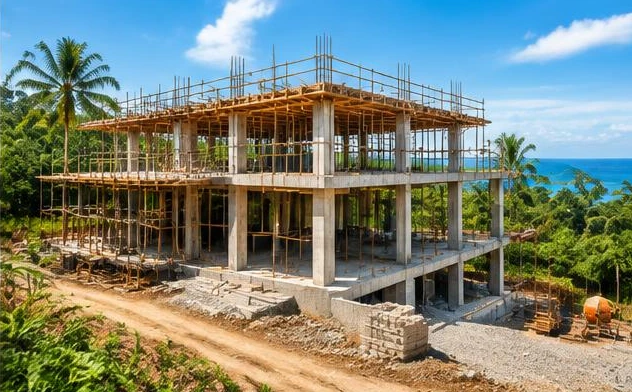
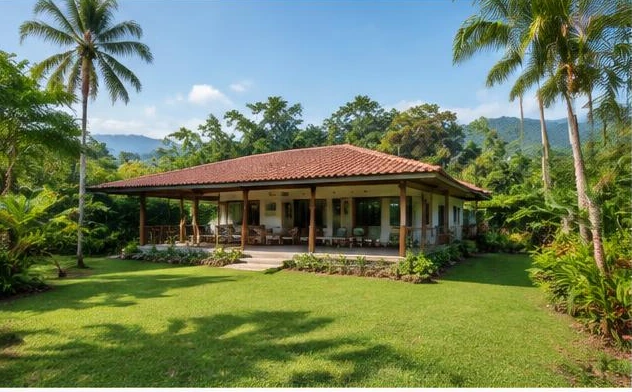
- plan to construct a private villa, residential apartment project, or hospitality resort
- want absolute certainty that the land they purchase is legally unencumbered and free of hidden easements
- need to understand Costa Rican environmental laws and protected zone regulations
- are seeking the independent perspective of an expert who understands the Costa Rican market and legal framework from the inside, wanting to avoid the risks of fraudulent listings.
1. LEGAL FRAMEWORK FOR BUILDING PERMITS AND LAND OWNERSHIP IN COSTA RICA
A) Precise zoning and building restrictions
One of the greatest risks when purchasing land is incomplete or intentionally distorted information regarding territorial zoning, which dictates what types of land use are officially permitted. Certain areas, particularly in tourist hotspots or near nature reserves, are subject to strict regulatory limits that can significantly restrict or entirely prohibit construction.
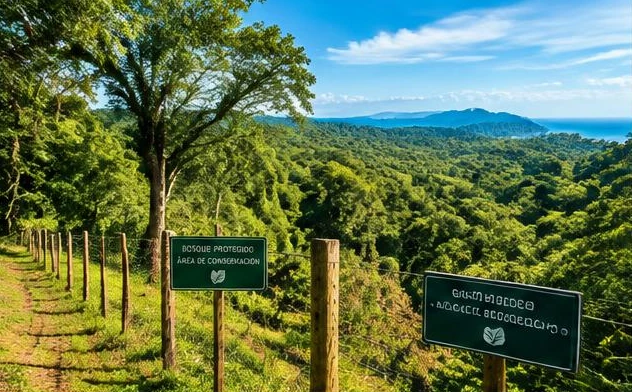
Costa Rica is globally renowned for its extraordinary biodiversity and the protection of its natural ecosystems. As part of nature conservation efforts, there are several types of zoned areas where any construction or commercial activity is strictly regulated or forbidden. These protected territories are defined by specific laws and decrees designed to safeguard the landscape, water resources, and biological corridors.
Zoned protected areas include national parks, biological reserves, protected forest regions, and ecosystems of high ecological value. Investment opportunities in these locations are very limited, as any construction impact could disrupt the natural balance.
Under Law 7575 (Forestry Law and environmental regulations, known in Spanish as Ley Forestal and related biodiversity conservation statutes) and subsequent regulations, specific areas of Costa Rica are under full state protection:
- Tortuguero: Located in northeastern Costa Rica along the Caribbean coast, this national park is famous for its sea turtle nesting beaches and extensive wetlands, which are home to numerous bird species, caimans, and other wildlife. Tortuguero is a strictly protected area within the national park system. No commercial or residential building is permitted here.
- Santa Rosa: A protected area in northern Costa Rica in the province of Guanacaste. Part of the conservation system, it is distinguished by dry tropical forests and rich fauna. The land is suited for scientific and ecological projects, but any private development encroaching on the natural environment is prohibited.
- Corcovado: A national park on the Osa Peninsula, considered one of the most biologically intense places on the planet. It is home to hundreds of endangered animal and plant species. Construction activity here is practically excluded.
- Osa Peninsula: The Osa Peninsula, where Corcovado National Park is located, features ecosystems that play a vital role in global biodiversity. Construction across the entire peninsula is subject to the most stringent oversight, and the majority of the land is reserved exclusively for conservation.
If you are considering investing in land in these areas, you must recognize that building plans are either completely out of the question or subject to an extremely complex approval process that is only realistically granted to specialized eco-research facilities.
Before buying, it is vital to verify whether the land lies within a protected zone. A specialized, independent attorney must confirm that the property is truly privately owned and free of environmental encumbrances.
Outside protected areas, you enjoy substantially more freedom, yet it remains essential to examine records in the National Registry (Registro Nacional) as well as with the Ministry of Public Works and Transport (MOPT), which oversees zoning and access roads.
Attention must also be paid to two additional factors:
- Water-scarce areas: In arid regions, such as parts of the Nicoya Peninsula, drinking water availability can be a critical constraint. If a location lacks sufficient water resources, the local municipality will not grant a building permit. You must verify the existence of a municipal water connection or the legal possibility of drilling a registered well in advance with the national water utility AyA (Instituto Costarricense de Acueductos y Alcantarillados).
- Density limitations: Individual municipalities (municipalidades) establish limits on building footprints and heights based on the capacity of roads, water networks, and sewage infrastructure.

Read also
KEY FOR KEY – A SMARTER PATH TO HIGHER-YIELD REAL ESTATE
B) Cadastral and environmental permits
If the land is eligible for construction under the local zoning plan, the project must obtain approval from the local municipality and secure an environmental permit through the national environmental agency, SETENA (Secretaría Técnica Nacional Ambiental).
Core documentation for verifying and approving a project includes:
- SETENA Permit: Environmental approval required for all building projects. It entails an evaluation of the development's environmental impact, which is particularly critical for coastal parcels.
- Plano Catastrado: The official cadastral survey map registering the exact boundaries, topography, and surface area of the land.
- Título de Propiedad: The title deed confirming the seller's undisputed legal ownership.
- Uso de Suelo: Land-use certificate issued by the relevant municipality, defining permitted uses (for instance, single-family residential, apartment complex, or hotel).
- Certificado de Libertad de Gravámenes: Certificate from the National Registry confirming that the property is free of mortgages, liens, tax debts, or pending litigation.
- Estudio de Impacto Ambiental (EIA): Environmental impact study required by authorities for larger projects altering the landscape.
- Permiso Municipal de Construcción: The final building permit issued by the municipal office, authorizing the start of construction works.
C) Concessions: The lease regime for maritime-terrestrial zones
Coastal land in Costa Rica is subject to a distinct legal regime. The Maritime-Terrestrial Zone Law (Ley sobre la Zona Marítimo Terrestre, or ZMT) stipulates that the 200-meter strip measured from the high-tide line is public property. These lands cannot be purchased under fee-simple private ownership; they can only be leased.
This coastal zone is divided into two sections:
- The first 50 meters from the ocean: Public zone (Zona Pública). In this strip, any private construction is strictly prohibited.
- The subsequent 150 meters: Restricted concession zone (Zona Restringida). Parcels in this belt can be leased long-term from the government, usually for periods ranging from 5 to 20 years. Development here is permitted only after obtaining specialized approvals at both municipal and central government levels. Concession agreements are approved by the Costa Rican Tourism Board (ICT) and administered by the respective municipality.
When acquiring concession land, you never own the underlying real estate; you become the holder of concession rights. It is therefore imperative to verify the concession's validity, remaining term, and specific conditions, which frequently dictate maximum building heights, permitted building materials, and the overall nature of the project.
2. WHAT MUST BE THOROUGHLY VERIFIED BEFORE SIGNING A CONTRACT
Before transferring any deposit or signing a reservation agreement, comprehensive legal due diligence must be conducted by an independent attorney specializing in Costa Rican real estate law:
- Verification in the Registro Nacional: Confirmation that the parcel is properly registered in the National Registry and that the seller is the sole registered owner. Every registered parcel carries its unique property identification number (Matrícula / Folio Real).
- Compliance with the Uso de Suelo: Obtaining an up-to-date land-use certificate directly from the municipality to confirm that your proposed project aligns with local zoning.
- Concession status (for coastal parcels): Verifying the registration of the concession contract, up-to-date payment of concession fees, and the absence of disputes with authorities.
- Legal encumbrances: Reviewing the Libertad de Gravámenes certificate to rule out liens, foreclosures, family claims, or easements.
"In Costa Rica, you cannot buy land based purely on a spectacular view. Behind every parcel lies strict environmental legislation, water availability assessments, and cadastral due diligence. A secure purchase requires thorough knowledge of local institutions and ground realities."
Maria Kopřivová
3. STATISTICS AND FRAUDULENT PRACTICES TARGETING FOREIGN BUYERS
Investing in Costa Rican real estate offers tremendous capital appreciation potential, yet it also carries genuine risks originating from deceptive practices by unscrupulous sellers who capitalize on a foreigner's unfamiliarity with the system.
Common fraudulent schemes and complications include:
- Distorted or omitted zoning details: Sellers often advertise land as ideal for a luxury villa or boutique hotel, even when it is located within a protected reserve or subject to a building moratorium. According to available estimates, up to 30% of foreign investors in Costa Rica have encountered major complications due to inaccurate zoning representations, leading to the complete halt of their development plans.
- Inaccurate or forged ownership titles: Properties being offered by parties who are not the legitimate owners, or parcels with questionable chains of title. In 2023, the Costa Rican National Registry (Registro Nacional) recorded over 2,000 cases involving attempted property transfers without valid verification of ownership rights.
- Unpermitted structures: It is relatively common to find parcels sold with existing structures that were never recorded in official registries and lack valid building permits. Costa Rican authorities strictly order the demolition of illegal structures, with all costs borne entirely by the current property owner.
- Fictitious or unavailable infrastructure: Advertisements frequently promise full utility connections, yet the reality on the ground differs. According to data from the National Water and Sewerage Institute (AyA), up to 40% of new construction projects in sought-after destinations like Nicoya or Guanacaste encounter critical infrastructure deficits, especially regarding potable water availability. Developing infrastructure retroactively can make project budgets unsustainable.
- Ghost parcels and falsified cadastral plans: In extreme scenarios, fraudsters produce authentic-looking cadastral plans for plots that do not physically exist or are located somewhere entirely different. The only reliable safeguard is independent verification directly through the Registro Nacional de Costa Rica, combined with physical boundary verification conducted by a licensed surveyor.
PLANNING AN INVESTMENT IN COSTA RICAN LAND?
Purchasing property abroad should be a rewarding and secure step, not a source of protracted legal disputes. As a Costa Rican native with years of diplomatic experience at the Embassy of the Republic of Costa Rica in Prague, I understand the legal landscape, local mentality, and hidden market nuances inside out.
I am here to assist you with:
- reviewing the legal, cadastral, and environmental status of your chosen property
- conducting independent ownership title verification through the Registro Nacional
- confirming water availability and the realistic feasibility of building permits
- guiding you safely through the structured purchase process, from initial selection to final title deed registration.
Simply fill out the brief form below the article or call me. I would be delighted to discuss your investment plans in an obligation-free consultation.

Complimentary personal consultation
Considering Costa Rica? Let's talk plans.
I help separate the dream from a sound investment: locations, numbers and the legal side, openly.
- I reply personally, never an assistant or call centre
- Discretion and confidentiality from the first word
- Concrete recommendations instead of generic advice

Author
Maria Kopřivová
Real Estate Investment Partner. Prague and Costa Rica, off-market transactions and investment property.