Costa Rica’s Law No. 7575 (Ley Forestal) is one of the most important regulations every foreign buyer, developer, and fund should understand before…
Are you considering buying land or real estate in Costa Rica and want to ensure that your investment carries no legal risk?
In my native Costa Rica, exceptional natural beauty meets an uncompromising legal framework for environmental protection. I often meet Central European investors who arrive captivated by the wild nature, beaches, and tropical rainforest, yet have little idea how profoundly Costa Rican environmental legislation governs the potential for construction, sale, and everyday use of land plots.
Among the most significant regulations is Law No. 7575, also known as the Law on the Protection and Conservation of Biodiversity and Natural Resources (Ley de Protección y Conservación de la Biodiversidad y de los Recursos Naturales). This regulation applies not only to public land, but also to private property. It defines strict rules that every foreign buyer must respect to avoid the risk of purchasing a plot where a building permit can never be obtained.
WHO THIS ARTICLE IS FOR
This overview is intended primarily for investors and buyers who:
- plan to purchase land, residential property, or a development project in Costa Rica
- are looking for opportunities in attractive locations near national parks, coastlines, or protected areas
- wish to understand legal boundaries, buffer zones, and environmental restrictions in advance
- need to conduct thorough legal due diligence on a parcel before signing contracts and transferring funds
- prefer a sustainable approach to investing in full compliance with Costa Rican law.

PROTECTION OF NATURAL AREAS UNDER LAW NO. 7575 AND ITS CORE PRINCIPLES
The law establishes that national parks, nature reserves, and protected areas are state property and enjoy the highest level of protection against commercial and construction activities. The purpose of this regulation is to preserve natural heritage and ensure the long-term sustainability of ecosystems that are critical to Costa Rica's biodiversity and climate stability.
Key provisions of the law:
- All construction work and commercial development are strictly prohibited in these areas, unless an exception is granted exclusively on ecological and scientific grounds.
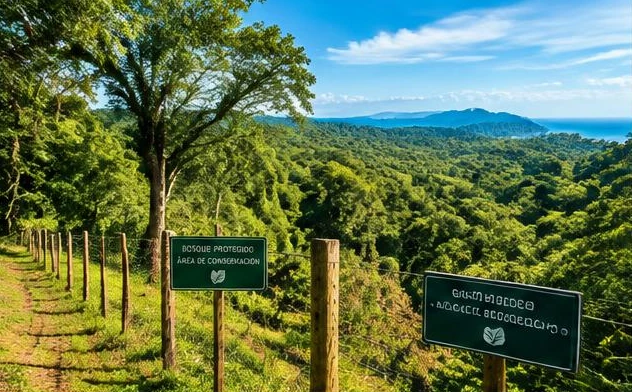
- Buffer zones surrounding national parks and protected areas typically span 2 to 5 kilometres, within which any human activity and potential construction are subject to very strict permitting procedures.
- In zones containing rare and endangered ecosystems, only low-impact ecological initiatives may be carried out, typically sustainable infrastructure and facilities for ecotourism.
- Watercourses and bodies of water have defined protection zones, standardly 50 metres from riverbanks and lake shores, where any disturbance is entirely prohibited.
Relevant government authorities and institutions:
- Sistema Nacional de Áreas de Conservación (SINAC): the national agency managing all protected areas in Costa Rica, including national parks. SINAC decides on the approval or rejection of any activities within protected areas and their immediate vicinity.
- Ministerio de Ambiente y Energía (MINAE): the ministry overseeing environmental protection and the sustainable management of natural resources.
- Secretaría Técnica Nacional Ambiental (SETENA): the key agency for the Environmental Impact Assessment (EIA) process, without whose approval no construction may commence in environmentally sensitive areas.
REGULATIONS ACROSS FIVE STRATEGIC REGIONS OF COSTA RICA
01SANTA ROSA NATIONAL PARK
Santa Rosa National Park is located in the northwest of the country, in the Guanacaste province. It is critical for the conservation of tropical dry forests, which rank among the most endangered ecosystems in the world. The site also carries deep historical importance, preserving the battlefield of the renowned 1856 victory against American filibusters.
- Construction and development ban: All commercial construction within the park is prohibited. Any exceptions apply exclusively to projects with minimal ecological impact, such as specialised scientific and ecotourism facilities that respect the historical character of the area.
- Buffer zones: The area surrounding the park is protected by a 2 to 5-kilometre buffer zone. Commercial development in this belt is strictly limited to prevent disturbance to the ecosystem and the site's cultural value.
02TORTUGUERO NATIONAL PARK
Located in northeastern Costa Rica, this park is among the most internationally significant natural sites. It serves as a vital nesting ground for endangered sea turtles, primarily loggerhead, leatherback, and hawksbill turtles. The park encompasses not only beaches, but also extensive lagoons, mangroves, rainforests, and freshwater canals.
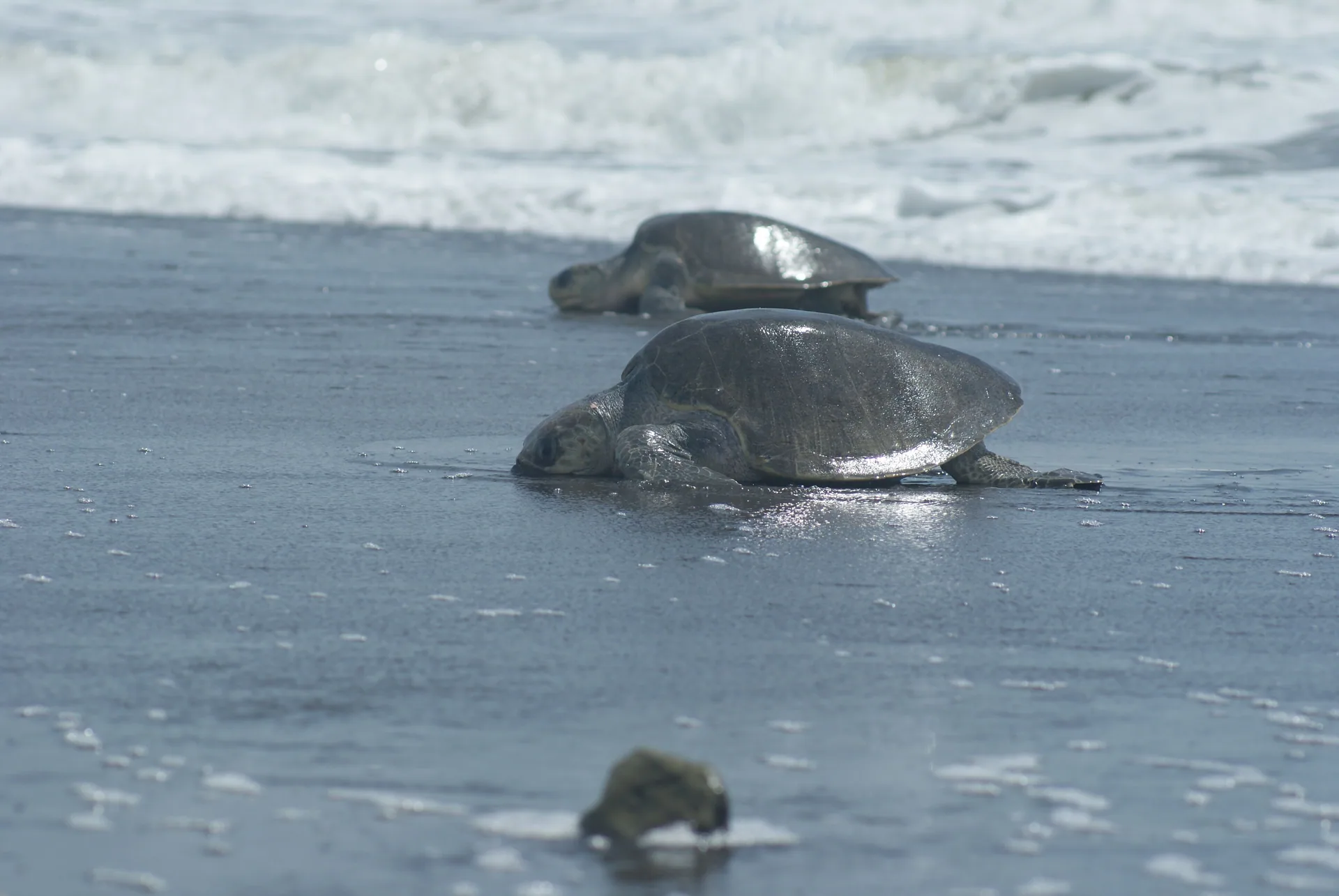
- Construction is completely excluded inside the park and along the adjacent coastal strip where turtles lay their eggs. Exceptions may be made only for ecotourism facilities with zero adverse environmental impact.
- A protection buffer of at least 50 metres applies around watercourses, canals, and lakes, with no construction permitted.
- Any investment project in the region requires a rigorous environmental audit and formal approval from both SINAC and SETENA.

Read also
REAL ESTATE INVESTMENT IN COSTA RICA: INVESTOR VISA & WORK RESTRICTIONS
03CORCOVADO NATIONAL PARK
Corcovado, situated on the southwestern Osa Peninsula, represents one of the most biologically intense places on Earth. It protects vast tropical rainforests and coastal zones, providing habitat for populations of jaguars, tapirs, and numerous rare bird species.
- Construction activity inside the park is entirely unlawful. Severe restrictions also apply to adjacent land plots located within buffer zones.
- Law No. 7575 imposes severe penalties for unauthorised logging and illicit land clearance. Any project in the park's vicinity must undergo a thorough Environmental Impact Assessment (EIA) conducted under the auspices of SETENA.
04THE OSA PENINSULA AND UNESCO BIOSPHERE RESERVE
The entire Osa Peninsula falls under the protection of a UNESCO Biosphere Reserve. It encompasses both the core zone of Corcovado National Park and surrounding biological corridors with an exceptional degree of protection.
- The special status of a biosphere reserve means that human activity is subject to strict international and domestic oversight. Large-scale development projects have no place here.
- Buffer zones extend several kilometres beyond the boundaries of the natural parks. Approvals are granted solely to individual, low-impact structures that satisfy rigorous sustainability criteria.
05INDIGENOUS TERRITORIES AND THE PROHIBITION OF LAND SALES
Law No. 7575 respects the special status of indigenous lands, protected by Indigenous Law No. 6172 (Ley Indígena) of 1977. Ethnic groups such as the Bribri, Cabécar, Ngöbe, Boruca, Teribe (Térraba), Maleku, and others manage approximately 8% of Costa Rica's total land area.
- Absolute ban on land sales: Land within these reserves cannot be legally transferred to foreign investors or to any individuals outside the respective indigenous community.
- Legal certainty: In areas such as Talamanca in the Limón province, home to the Bribri and Cabécar peoples, the strictest regime protecting communal ownership applies. Any attempt to purchase such property is void from the outset (null and void), and the investor risks a complete loss of all invested funds.
"Costa Rica is a magnificent country with tremendous investment potential, but its legal system protects nature without compromise. Foreign investors often see only a spectacular view, while the property registry may conceal a complete ban on construction. My role is to guide you safely through the entire process, ensuring you acquire a vetted property with genuine value and a clean legal status."
Maria Kopřivová
PRACTICAL APPROACHES TO LAND INVESTMENT IN COSTA RICA
A successful land acquisition in Costa Rica requires systematic due diligence on several levels:
- Comprehensive search in the National Registry (Registro Nacional) to verify the legitimate owner, as well as any existing mortgages, liens, or legal encumbrances.
- Analysis of environmental restrictions under Law No. 7575, including verification of distances from national parks, nature reserves, and water sources.
- Verification of SINAC buffer zones and evaluation of project feasibility with SETENA.
- Confirmation of boundaries relative to indigenous territories under Law No. 6172 to prevent an invalid transfer.
- Verification of legal access rights, as well as the availability of utilities and water, which in Costa Rica are essential prerequisites for securing a building permit.
This diligence is not an obstacle. On the contrary, it ensures that the value of your property appreciates over time while its legal and environmental standing remains beyond dispute.
PLANNING TO BUY LAND IN COSTA RICA WITH CONFIDENCE?
Are you considering purchasing land, building a private residence, or investing in a hospitality project in Costa Rica? Get in touch if you wish to:
- evaluate a selected property under Law No. 7575 and related environmental regulations
- avoid legally invalid purchases within protected or indigenous territories
- identify fully vetted investment opportunities aligned with your financial and personal objectives
- work with a partner who understands the Costa Rican market, local business culture, and legal landscape through both personal background and diplomatic practice.
I would be delighted to discuss your investment plans in an introductory consultation. Simply fill out the brief contact form below this article, and we will arrange an in-person or online meeting.

Complimentary personal consultation
Considering Costa Rica? Let's talk plans.
I help separate the dream from a sound investment: locations, numbers and the legal side, openly.
- I reply personally, never an assistant or call centre
- Discretion and confidentiality from the first word
- Concrete recommendations instead of generic advice

Author
Maria Kopřivová
Real Estate Investment Partner. Prague and Costa Rica, off-market transactions and investment property.