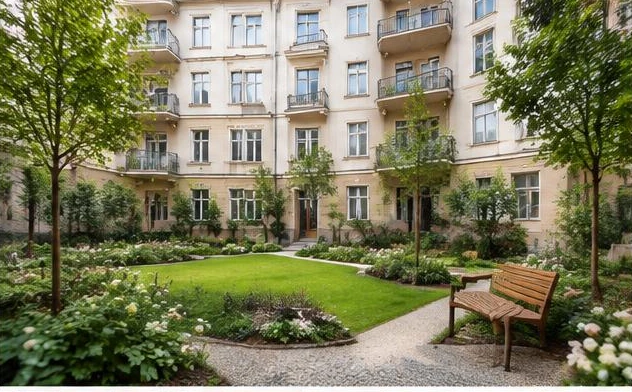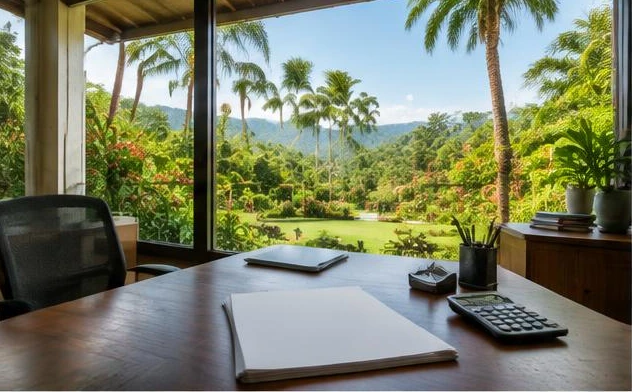
Location is the only factor that cannot be changed or corrected. For this very reason, it ultimately determines the success or failure of a real estate…
Are you considering purchasing an investment property in Prague or abroad and want to ensure that your capital is truly protected?
Real estate investment has long been one of the most reliable vehicles for preserving and growing family and corporate wealth. In the practice of private and off-market transactions, however, experience repeatedly shows that the most expensive mistakes do not stem from poorly structured bank financing or overrun renovation budgets. They arise from buying in the wrong location.
Location is the single parameter you can never fix after signing the purchase agreement. You can replace the floors, reconfigure the layout, upgrade building systems, or completely transform the facade. The geographic, social, and economic point where the property stands, however, remains unchangeable.
On this page, I examine how seasoned professional investors evaluate location, why the famous rule of "location, location, location" is not a cliché but an exact investment law, and what criteria I use when selecting properties in Prague as well as in my native Costa Rica.
WHO THIS ARTICLE IS FOR
This analysis is intended primarily for investors and capital owners who:
- are planning to purchase a residential property or apartment building in Prague, or development opportunities abroad
- are seeking long-term stable rental income, high occupancy, and the preservation of purchasing power
- do not want to fall for tempting, yet often unrealistic "paper yields" on projects in weak locations
- demand clear, proven criteria for evaluating real risk and future liquidity.

WHAT LOCATION MEANS FROM AN INVESTOR'S PERSPECTIVE
From the perspective of an experienced investor, location is neither a subjective impression, a charming atmosphere, nor a prestigious-sounding district name. It is a measurable, structured set of economic factors that consistently generate demand for housing and rental products over the long term.
In professional analysis, we strictly separate two layers: macro-location and micro-location. Each carries a distinct type of value and potential risk. As investors, we do not merely buy a physical structure; we buy the economic context that enables:
- long-term and predictable occupancy
- pricing power when setting and increasing rents
- stable and healthy cash flow without unexpected interruptions
- high liquidity at the moment you decide to pursue a future sale (exit).
If the location itself does not generate natural and lasting demand, the property may be exceptionally beautiful, yet from an investment standpoint it remains fragile and vulnerable.
Location protects capital during market downturns, stabilizes yields, significantly shortens selling time, and fundamentally reduces overall investment risk.
WHY LOCATION DETERMINES YIELD, RISK, AND EXIT
Almost anyone can calculate gross yield and spreadsheet costs today. The fundamental pitfall is that compromising on location does not show during calm periods when the market is rising. It only fully reveals itself when you need to:
- refinance a loan under changed market conditions
- quickly secure a new, high-quality tenant
- sell the property at a fair price without having to offer steep discounts.
A weak location does not hurt at the time of purchase. It begins to hurt when the market stops forgiving mistakes.
Transport, Accessibility, and the Time Value of a Location
Long-term analyses and actual practice confirm that connectivity to core public transit and rail infrastructure represents a direct, measurable pricing factor. International meta-analyses examining the impact of metro stations, trams, and rail transit hubs repeatedly prove that fast transport connectivity carries a quantifiable economic value that the market immediately reflects in both prices and rental rates.
The exact same principle applies to the walking accessibility of everyday services (so-called walkability).
Proximity to shops, schools, parks, restaurants, and employment hubs is not just a leisure benefit. It is a fundamental condition that directly affects how quickly units are leased and tenants' willingness to pay premium rent. In international investment circles, this phenomenon is commonly referred to as the "walkability premium." Both tenants and buyers are consistently willing to pay higher sums for a place that saves them time and offers seamless everyday convenience.
From a capital perspective, accessibility represents the time value of a location: the ability of a place to offer comfort, efficiency, and stable demand across all phases of the market cycle.
HOW TO PROPERLY EVALUATE A LOCATION: SIX STEPS OF A PROFESSIONAL INVESTOR
When assessing properties, I follow a proven methodology used by institutional investors: first, we examine the macro-location, then the micro-location, and only finally the building or apartment itself.
01MACRO-LOCATION: WHY DEMAND WILL PERSIST HERE IN TEN YEARS
The macro-location answers whether a specific city or region can generate and sustain purchasing power over the long term.
In this analysis, I focus primarily on:
- the area's economic engine (unemployment rate, diversity of employers, and stability of key industries)
- demographic trends and migration (natural population growth, influx of skilled professionals and students)
- planned infrastructure investments (expansion of transit routes, new transit hubs, public funding committed to the area).
The practical stress test is simple: If the broader economy were to cool down, would demand hold up, or does the entire area depend on a single industry and a single factory?
02MICRO-LOCATION: THE DIFFERENCE OF A SINGLE STREET
While macro-location defines the framework, micro-location determines real occupancy, specific rental levels, and the overall reputation of your asset. A substantial difference in project economics can be caused by the contrast between two parallel streets or opposite ends of the same boulevard.
A thorough examination of micro-location includes:
- pedestrian connectivity and immediate links to public transit stops
- the availability of shops, healthcare, and essential services in the immediate neighborhood
- safety, noise levels, and the overall felt comfort of the surroundings
- the architectural quality of public spaces and the address's established reputation
- genuine everyday usability of the location, rather than just a superficial first impression from a daytime viewing.
03SUPPLY VERSUS DEMAND: BARRIERS TO DEVELOPMENT AND FUTURE COMPETITION
Prior to any acquisition, it is essential to understand nearby development plans in detail:
- what projects are being prepared in the area and on what timeline
- the real limits on new construction (zoning plans, historic preservation restrictions, building moratoriums)
- whether the current housing shortage is structural and permanent, or merely temporary.
Strict regulatory environments and heritage conservation paradoxically offer investors a major advantage, as they prevent sudden market oversaturation with new inventory.

Read also
LAW NO. 7575: KEY RULES FOREIGN INVESTORS IN COSTA RICAN LAND AND REAL ESTATE MUST KNOW
04THE RENTAL MARKET IN NUMBERS: THE LOCATION'S TRUE PURCHASING POWER
The goal is not to calculate theoretical rent based on optimistic assumptions, but to determine what the local market can realistically absorb:
- comparison of actual rents for directly comparable units in the immediate area
- average time required to lease an apartment and any potential seasonal effects
- the profile and stability of the typical tenant (who is looking for housing in the area and for what reasons).
An experienced investor always prefers a stable, creditworthy, long-term tenant over trying to maximize immediate spreadsheet yields at the expense of high turnover.
05LIQUIDITY AND EXIT: WHO WILL BE THE FUTURE BUYER
Even before signing an acquisition agreement, you must have clarity regarding the eventual exit:
- who makes up the target group of future buyers (another private investor, an owner-occupier family, an investment fund)
- what the transaction turnover is in that segment
- how long comparable properties take to sell at this address.
A prime, proven location guarantees a broad pool of prospective buyers, delivering peace of mind and rapid liquidity when it comes time to exit.
06STRESS TEST: HOW THE PROPERTY BEHAVES OUTSIDE AN IDEAL WORLD
Every investment thesis must hold up under adverse conditions:
- rising interest rates and falling consumer purchasing power
- temporary surges in the supply of vacant apartments nearby
- legislative and regulatory interventions in the residential rental market.
During downturns, prime locations decline in value significantly more slowly, and once volatility subsides, they recover their demand and price appreciation much faster than peripheral areas.
PRAGUE: WHY DIFFERENCES BETWEEN DISTRICTS RUN INTO THE MILLIONS
Prague is a fascinating market where investment value is determined not primarily by the square footage of an apartment or the cost of its finishes, but above all by the specific district and its micro-location. From the perspective of long-term capital stability, the highest value belongs to locations that meet four core criteria simultaneously:
- direct walking distance to a metro station or core tram line
- complete local infrastructure of shops, schools, restaurants, and employment hubs
- strictly limited room for new development projects
- continuous, disproportionately strong demand for quality rental housing.
These attributes are found in traditional, fully established districts in the wider city centre with complete existing amenities.
A fundamental rule applies in Prague: a smaller apartment in an exceptionally well-functioning location with outstanding public transit access is far safer and more stable as an investment than a large-format apartment on the periphery with weaker public amenities.
This difference does not merely show up in the purchase price per square metre. It translates above all into the speed of finding a new tenant, the long-term reliability of rental income collected, resilience against broad market downturns, and ultimately into liquidity upon future resale. This is precisely why sale prices and profits across different Prague addresses, even for properties of identical size or layout, can differ by millions of crowns.
INTERNATIONAL INVESTMENTS AND MY EXPERIENCE IN COSTA RICA
For investments outside the Czech Republic, location means far more than an address on a map. On an international scale, the concept of location reflects the entire institutional and legal framework within which the property sits. It is these structural foundations that determine the safety of your capital.
When analyzing international acquisitions, I verify, in particular:
- the enforceability of property ownership rights and the transparency of the transaction process
- the long-term strength and sustainability of rental demand
- clear zoning and planning rules as well as local development caps
- the reliability and capacity of public utilities and transport infrastructure
- the stability of tourism, particularly whether demand is year-round or merely a brief seasonal spike
- the country's political stability and the independence of key state institutions
- the predictability of the exit strategy and future marketability.
Accessibility to services, transportation, and functional support infrastructure abroad is not a matter of luxury; it is an essential pillar of capital preservation.
The Operational Reality of an International Location
Having long specialized in the sale of premium investment properties and development projects in my native Costa Rica, I must highlight an aspect that Czech investors often underestimate: the daily operational reality of the location.
It is not enough for an area to feel charming during a two-week holiday in peak tourist season. An investor must practically verify how the property operates during the off-season and whether it can be efficiently managed without requiring your personal presence.
In practice, this means evaluating:
- the availability and professional standards of local management companies (high-quality property management is the cornerstone of success)
- service infrastructure, meaning the response time of maintenance, tradespeople, cleaning reliability, and vendors
- rental market dynamics and occupancy rates during the off-peak months.
For short- and medium-term rental models, micro-location quality and service accessibility directly influence occupancy, average daily rates, and operating expenses immediately. When investing abroad, choosing the right location is therefore not just about return, but fundamentally about eliminating systemic and operational risk.
"You can renovate a property at any time, reconfigure its layout, or upgrade finishes to match new trends. But you cannot move the location by a single metre. That is why choosing the right location is the single most critical decision determining the stability of your yield and your flexibility when it comes time to sell."
Maria Kopřivová
If you want to approach real estate professionally, always start with a rigorous assessment of the location. Not with appealing renderings, not with a discount on the asking price, and not with gut feeling alone.
Before any acquisition, ask yourself three essential questions:
- Will this location support me even through a severe economic crisis?
- Will it protect the real value of my capital over a ten- to twenty-year horizon?
- Will it enable a fast, orderly, and profitable exit should the need arise?
If you answer yes to all three questions, you have found a true investment. If not, you are buying unnecessary risk.
ARE YOU PLANNING A REAL ESTATE INVESTMENT IN PRAGUE OR ABROAD?
Whether you are considering purchasing an apartment building, a premium apartment in Prague, or seeking a vetted investment property in Costa Rica, I would be glad to discuss your plans in detail and evaluate the economic potential of your chosen locations.
My goal is to protect your capital and help you select assets that stand the test of time and shifting market cycles.
Simply fill out the brief inquiry form directly below this article. I look forward to getting in touch to arrange a confidential in-person or online consultation.

Complimentary personal consultation
Facing a similar situation? Let's discuss it.
Every property and every sale is different. Write me a few lines and I will suggest a concrete next step.
- I reply personally, never an assistant or call centre
- Discretion and confidentiality from the first word
- Concrete recommendations instead of generic advice

Author
Maria Kopřivová
Real Estate Investment Partner. Prague and Costa Rica, off-market transactions and investment property.