Demolished Cottage Is Not a Renovation: Landmark Court Ruling Redefines Rules for New Builds, Holiday Homes and Family Houses
Are you planning a major modernization of a holiday home or family house and wondering where a renovation ends and a new build begins?
Do you think that if you tear down an old cottage and build a new house a few meters away, it still counts as a renovation? This is a common misconception that can carry severe legal and financial consequences. A ruling by the Supreme Administrative Court and the subsequent dismissal of the complaint by the Constitutional Court set very strict ground rules for anyone looking to modernize a recreational cabin, cottage, or family house.
On this page, I examine a specific precedent-setting case where property builders lost their property due to conflating legal terms, and I explain the limits established by the law and case law regarding the retrospective permitting of unauthorized constructions.
WHO THIS ARTICLE IS FOR
The information on this page will be especially valuable for property owners and investors who:
- own a holiday cabin, cottage, or older family house in an area with strict zoning plan regulations
- are planning an extensive refurbishment that technically approaches a complete demolition of the original structure
- are considering shifting the building on the plot to a more favorable location or expanding its built-up area
- rely on resolving any deviations from their building notification or project design through retrospective building approval.
If you find yourself in a similar situation, it is essential to understand the exact boundaries of the building code before heavy machinery enters the land.
1. THE BRNO COTTAGE CASE: CONFUSING TERMS WITH COSTLY CONSEQUENCES
The case, which made its way to the highest judicial instances, began in 2008 on the outskirts of Brno. The owners of an older holiday cabin notified the building authority of their intention to carry out building alterations to the property, for which they received consent.
However, the local zoning plan set strict conditions. It explicitly permitted:
- only renovations of existing buildings,
- or new builds with a maximum built-up area of up to 25 m².
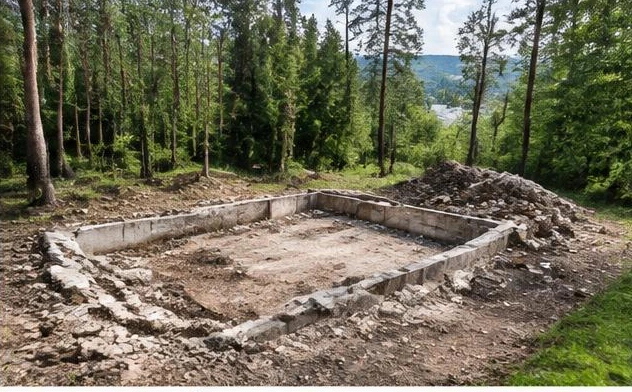
Instead of the notified alterations, however, the owners completely demolished the original building. On the same plot of land, approximately 23 meters away, they built a brand new structure with a significantly larger built-up area.
According to the owners, they were forced into the demolition after discovering that the original cabin had been built from substandard, hazardous materials, such as old batteries, which posed an unacceptable health risk to their family. They emphasized that the new building was functionally and purpose-wise a continuation of the original one, and that in their eyes it still constituted a renovation, even if technically it was new construction. Their aim was not to circumvent the law, but to secure a safe recreational base.
2. THE BUILDING AUTHORITY'S REACTION AND JUDICIAL REVIEW
During a subsequent inspection by the building authority, it emerged that instead of the approved alterations, the original building had been de facto demolished and an unauthorized new build had been erected that failed to meet zoning regulations. The authority therefore initiated proceedings for the removal of the structure.
The owners submitted an application for retrospective building approval, but failed. The authorities concluded that:
- the maximum permitted built-up area had been exceeded,
- the building had been relocated outside the original footprint,
- the project was unequivocally a new build, not a renovation.
The decision of the building authority was upheld on appeal by the regional authority and subsequently by the regional court in an administrative lawsuit. The court stated that the builders had knowingly violated the provisions of the Building Act and the zoning plan, and that a structure erected in breach of the law cannot be retrospectively legitimized. The subsequent cassation complaint was also rejected by the Supreme Administrative Court, which emphasized that a builder cannot deliberately bypass spatial planning rules and rely on retrospective authorization.
3. LANDMARK CONSTITUTIONAL COURT RULING CASE NO. II.ÚS 873/25
The Constitutional Court drew a definitive line under the case in its ruling, Case No. II.ÚS 873/25, dated 3 April 2025, dismissing the owners' constitutional complaint.
The court formulated several key legal conclusions:
- Neither the right to housing nor the protection of private life can be interpreted as justifying construction in breach of the zoning plan and without proper authorization.
- Statutory definition of renovation: In interpreting the concept of renovation, both the administrative courts and the Constitutional Court relied on the concept of building alterations under Section 2(5)(c) of Act No. 183/2006 Coll., on Spatial Planning and Building Code (Building Act), which are defined as changes to a completed building while preserving its exterior perimeter. Demolition and relocation by 23 meters fundamentally rule out this definition.
- Prohibition of abuse of rights: A situation where a builder knowingly acts outside the law and subsequently seeks legal protection for a position they themselves violated cannot be tolerated.
4. IMPLICATIONS FOR PROPERTY OWNERS AND REAL ESTATE INVESTORS
This court ruling establishes inviolable boundaries for both building authorities and courts. Administrative discretion in deciding on retrospective legalization is not limitless and must strictly respect the public interest and the zoning plan.
Authorities cannot grant retrospective approval simply because a building already stands, is fully occupied, or because the owner invested millions of crowns into it. A breach of the law cannot be remedied by subjective justifications, such as assuming things will somehow work out, or citing the health hazards of the original structures. For builders and investors, the warning is clear: bypassing approved parameters can result in an order for demolition with no right to any financial compensation.
"In my real estate practice, I often see attempts to interpret rules more loosely, especially with recreational properties in attractive locations. However, this court verdict is uncompromising. Respect for the zoning plan and for the precise legal classification of a building is the only way to protect the value of family assets and invested capital."
Maria Kopřivová
If you are interested in further insights into the real estate market and asset management, I also recommend reading my other articles:
- Who Can Afford an Average-Sized New 3+kk Apartment in Prague Today?
- Why Sreality Alone Is Not Enough: The Biggest Myth in Property Sales That Could Cost You Hundreds of Thousands
- Property Sales and VAT Exemption: What Changes from July 2025?
ARE YOU PLANNING TO SELL OR APPRECIATE YOUR PROPERTY?
Are you dealing with the sale of a cabin, cottage, family house, or building plot and want to ensure that the entire process is legally secure and achieved at the highest possible price?
Get in touch if you are looking for a professional partner who will:
- thoroughly examine the legal and factual status of the property, including compliance with the zoning plan,
- reach out to creditworthy and vetted buyers from my private network,
- negotiate secure contractual terms and guide the transaction to a successful signing.
Simply fill out the short form right below the article or give me a call. I would be delighted to discuss the options for your property in a non-binding consultation.
Read also
BUILDING ILLEGALLY IN COSTA RICA DOESN’T PAY OFF – NOT EVEN IF YOU KNOW THE PRESIDENT

Complimentary personal consultation
Facing a similar situation? Let's discuss it.
Every property and every sale is different. Write me a few lines and I will suggest a concrete next step.
- I reply personally, never an assistant or call centre
- Discretion and confidentiality from the first word
- Concrete recommendations instead of generic advice

Author
Maria Kopřivová
Real Estate Investment Partner. Prague and Costa Rica, off-market transactions and investment property.