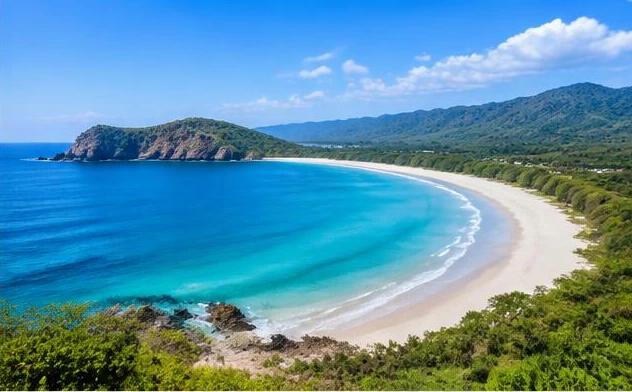
Waldorf Astoria, St. Regis and Papagayo are reshaping luxury property in Costa Rica. Verified milestones, prices, management and risks from a Costa Rican native.
Imagine a morning overlooking the Pacific. Your home is not a hotel room, but your own private retreat. Yet its services can be delivered by a team whose standards you know from the world's finest hotels. This combination of privacy and service is the foundation of what the international property market calls branded residences. In Costa Rica's Guanacaste, this is no longer merely a distant vision: the first homes are being handed over to owners, and further projects are taking shape.
For me, a native Costa Rican from Liberia in Guanacaste, this is an interesting sign of the transformation of my home region. For an investor, however, another question matters more: what are you actually paying for, what rights are you buying, and what remains after costs? In this original overview, I combine documented project reports with a practical perspective on property decisions. This is neither an offer of these projects nor a claim that I represent the hotel brands mentioned.
Guanacaste · Papagayo · Punta Cacique
Luxury is an experience. Investment needs evidence.
- 2025
- Opening of Waldorf Astoria Punta Cacique
- 2026
- Handover of the first Estate Homes, according to Hilton
- 2027
- Announced opening date for St. Regis, not confirmation of completion
Overview as of 27 November 2026. Dates and offerings may change. Milestones are based on the reports cited below.
What branded residences are, and what you are not buying
A branded residence is a residential property contractually associated with a particular brand. It may be a villa, an apartment or another type of residential product. It may include concierge services, maintenance, access to restaurants and wellness facilities, or the option to join a rental programme. However, the scope of services, their cost and the legal form of ownership vary from project to project.
You are not automatically buying a stake in a hotel, guaranteed occupancy or an assurance that the hotel group guarantees the developer's obligations. Various entities may be involved in the transaction: the landowner, developer, seller, licensing brand and operator. Their roles must be clearly defined in the contracts. Nor does the word “residences” in a name tell you, on its own, whether it refers to a unit for sale, accommodation available to book or another product.
Why Guanacaste and the Gulf of Papagayo?
The region's strength is not just its ocean views. For a second home, accessibility from Liberia airport, the standard of services and the character of the particular location all matter. Papagayo combines coastal scenery with existing resorts and residential communities. Punta Cacique is a separate community on the Cacique peninsula, in the broader Gulf of Papagayo area. It is not correct to present all projects here as sharing the same location or the same developer.
In its analysis dated 28 September 2026, El Financiero describes a shift in luxury tourism towards privacy, nature and wellness. It also points out that Costa Rica's tourism institute, ICT, has no separate statistical category for “ultra-luxury”. This trend therefore cannot legitimately be used to derive a precise number of wealthy buyers or a forecast of residential occupancy. 5
Three documented stories reshaping the local market
01 · Residences handed over
Waldorf Astoria Punta Cacique
On 21 July 2026, Hilton announced the completion and handover of the first three Estate Homes in a collection of 22 homes. The same announcement stated that more than half of the collection had been sold and ten homes were entering the final offering. The hotel opened in April 2025.
Asking prices for the Estate Homes at that time ranged from approximately USD 7.5 million to USD 11.75 million. These are prices cited in the report, not an indication of current availability or completed purchase prices. Hilton states that owners can participate in a professionally managed rental programme. The option to participate does not, in itself, mean guaranteed income.
02 · Announced development
St. Regis Papagayo
On 22 May 2025, Marriott announced an agreement for the first St. Regis hotel and residences in Costa Rica. The announcement scheduled the opening for early 2027. The Tico Times subsequently reported the start of construction on 16 September 2025, describing 120 hotel rooms and 143 branded residences.
For a buyer, this presents a different decision from purchasing a home that has already been handed over: the schedule, deposit terms, handover arrangements, contractual protection against delays and actual stage of completion all require assessment. A media report about construction starting does not confirm the current state of construction.
03 · Long-term capital
Península Papagayo and Mohari
On 17 July 2026, Mohari Hospitality announced its acquisition of Gencom's remaining 30% stake, becoming the sole owner of this resort and residential destination. Its report lists Four Seasons, Andaz and Nekajui, a Ritz-Carlton Reserve.
For an investor, this is evidence of concentrated capital and a long-term development strategy. It is not evidence of ownership of the entire geographical peninsula, nor a guarantee that every neighbouring plot will increase in value.
A branded residence, a standalone villa or an apartment?
The best choice is not automatically the most expensive. What matters is whether you want a family retreat with a high standard of service, greater independence or primarily an income-generating asset. The following comparison is an advisory framework, not a universal description of every project.
| Question | Branded residence | Standalone villa | Apartment in a community |
|---|---|---|---|
| What is the main value? | A combination of property, brand and agreed services | Privacy, individual character and greater freedom | Shared infrastructure and generally fewer maintenance responsibilities |
| Who handles operations? | The operator under the contract, which does not automatically cover everything | The owner or their chosen property manager | Community management and, where applicable, a separate rental manager |
| What requires attention? | Service charges, usage rules, rental programme and brand licence | Maintenance, infrastructure, security and management quality | Bylaws, shared costs and rental restrictions |
| Is the return guaranteed? | No. Only if there is a specific, enforceable guarantee from a vetted counterparty | No | No |

Read also
How to move to Costa Rica? Visas, visa-free access, and what to watch out for
How much does a hotel-managed residence actually earn?
Rental income is only the start of the calculation. Management, community fees and services, maintenance, insurance, taxes, replacement of furnishings and financing costs must all be deducted. Personal stays may also occupy precisely the dates that would otherwise generate the highest income. A high nightly rate therefore does not, on its own, mean a high net return.
Illustrative calculation, not a forecast
The same ocean view. Two different outcomes.
Assume total invested capital of USD 2 000 000, 120 paid nights and an average achieved rate of USD 1 000 per night. Gross annual income is USD 120 000. With total operating costs of USD 70 000, USD 50 000 remains, equivalent to 2.5% of invested capital before financing and the owner's individual taxation.
If only 80 nights are rented at the same rate and with the same costs, USD 10 000 remains, equivalent to 0.5%. Actual costs may vary with occupancy. These simplified figures illustrate how sensitive the outcome is; they are not figures for Waldorf Astoria, St. Regis or any other project.
Net operating income = rental income − all operating costs
A decision requires a budget for the specific unit, multiple scenarios and a distinction between the income investment and the value of personal use.
Seven questions before making a reservation or paying a deposit
- What right am I actually acquiring? Verify the title, cadastral identification, any concession and its transferability, duration and restrictions. In Papagayo, a simple rule for ordinary coastal land cannot automatically be applied: a specific tourism project regime exists. El Financiero describes it in its overview of concessions. [6]
- Who is my contractual counterparty? Distinguish between the seller, developer, hotel brand and manager. Establish who is responsible for completion and who is responsible for operations.
- What will I have to pay each year? Request a breakdown of recurring charges, special assessments, replacement reserves and the rules governing increases.
- Can I use and rent out the property as I wish? Check whether the rental programme is mandatory or voluntary, along with personal stays, blackout dates and the option to appoint another manager.
- What happens if there is a delay or the brand leaves? Understand the terms governing deposits, their protection and refund, and the legal consequences of termination of the licensing or operating agreement.
- Is the property technically and legally ready for operation? For the specific property, verify permits, water, wastewater, access, utility connections, insurance and handover documentation with local professionals.
- What would a future sale involve? Check transfer fees, required consents, any right of first refusal and genuinely comparable transactions. A historical asking price is not evidence of liquidity.
What investors should take away
Branded residences can make sense for someone who values time, privacy and consistent service. They may be attractive as a second home and for long-term asset diversification. However, they are not an automatic substitute for a bond or a cheaper route to passive income. A sound purchase must stand up to scrutiny even when you temporarily remove the famous hotel's logo.
My perspective draws on my knowledge of my native Guanacaste and my experience working at the Embassy of the Republic of Costa Rica in Prague. Trust between two countries is built not on an advertising image, but on clear decision-making, local context and verifiable documentation. That is why the specific property and its documentation must always take precedence over the story of the destination as a whole.
Frequently asked questions about branded residences in Costa Rica
Does a hotel brand mean a guaranteed return?
No. A brand may define the standard of service, but income depends on rates, occupancy, costs and contracts. Any guarantee must be assessed separately, including its provider and enforceability.
Are St. Regis Papagayo and Waldorf Astoria Punta Cacique the same project?
No. They are separate projects in the broader Guanacaste and Gulf of Papagayo region. Each has its own development, operating and contractual arrangements.
Can I rent out the residence when I am not there?
That depends on the terms of the specific unit and project. For the Estate Homes in Punta Cacique, Hilton stated that owners could join a managed rental programme. This option cannot automatically be assumed to apply to all branded residences.
Do the prices quoted represent a current offer?
No. The article cites dated project reports. Availability, price, contractual terms and construction status must be verified again before any specific decision.
Does a good investment need a famous hotel brand?
No. A standalone villa or a high-quality apartment may also be a better fit for your requirements. What matters is the balance between total price, legal certainty, costs, utility and realistic returns.
Where to go next and the sources behind this article
To select a specific property, visit Costa Rica Real Estate. For broader requirements, explore the Private Investors' Club. Practical considerations are explored further in articles on the risks of investing in Costa Rica, rental management and purchase closing costs.
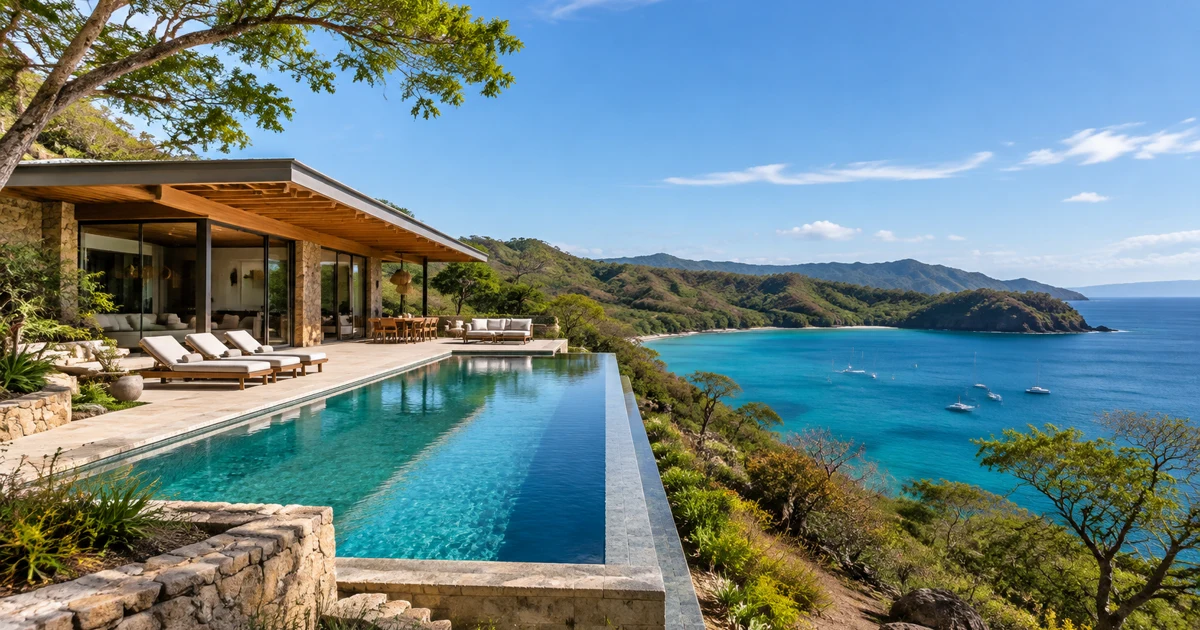
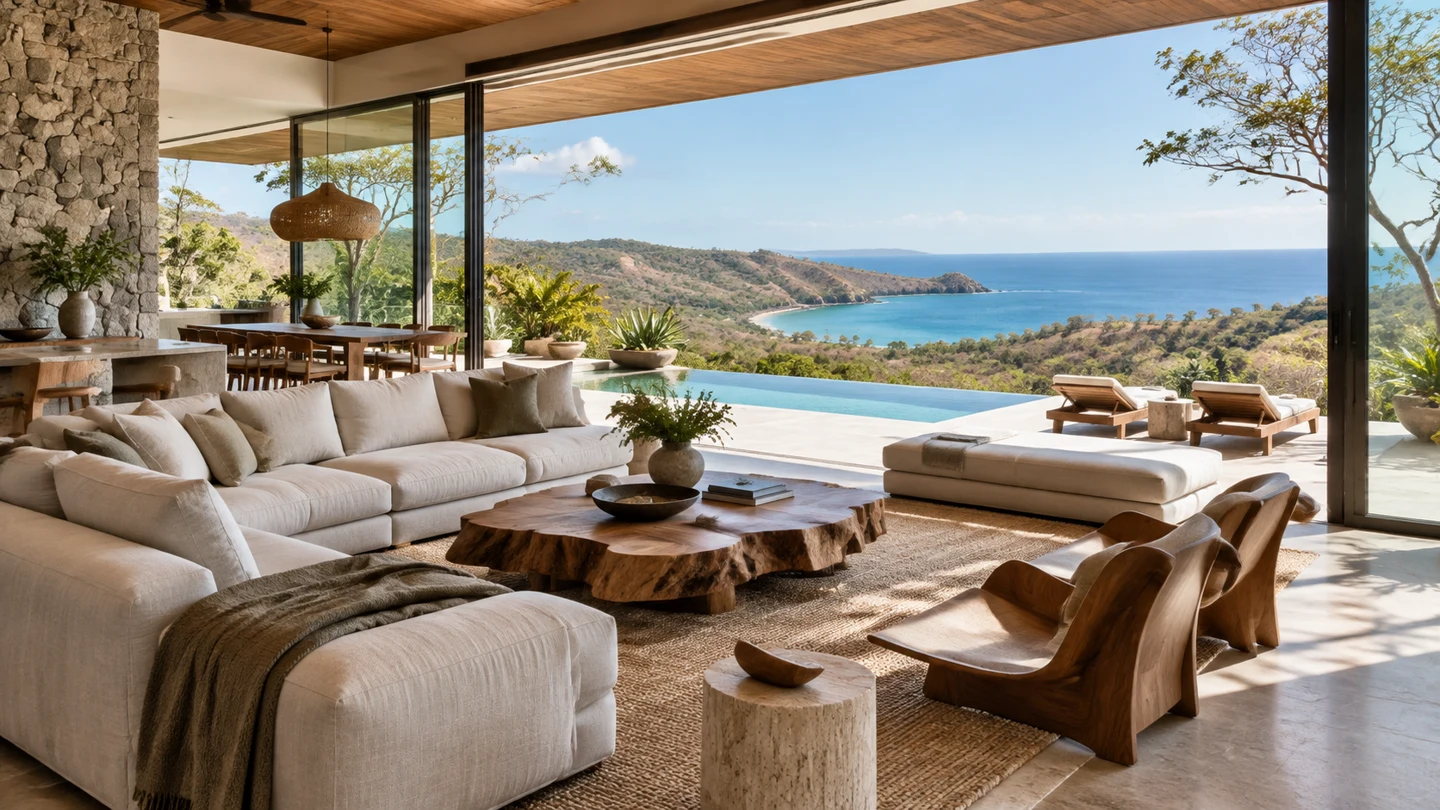
Sources and methodology: This article is an original synthesis by Maria Kopřivová, not a translation of a single press release. Project information [1] to [3] comes from Hilton, Marriott and Mohari, all of which are interested parties. Additional context is provided by The Tico Times [4] and El Financiero [5] and [6]. Citing them does not constitute independent confirmation of all developers' marketing claims. The advisory comparison and illustrative calculation are original explanatory frameworks. Both the cover and interior images are AI-generated architectural illustrations, not documentation of the projects mentioned.
Prepared on 27 November 2026. This is an informational overview, not individual legal, tax or investment advice. For a specific transaction, current documentation must be verified with local professionals.

Complimentary personal consultation
Considering Costa Rica? Let's talk plans.
I help separate the dream from a sound investment: locations, numbers and the legal side, openly.
- I reply personally, never an assistant or call centre
- Discretion and confidentiality from the first word
- Concrete recommendations instead of generic advice

Author
Maria Kopřivová
Strategic investment real estate partner for Prague and Costa Rica. Specializes in off-market apartment building sales and development projects in Guanacaste. Background at the Embassy of the Republic of Costa Rica in Prague, quoted by ČTK, e15, and Newstream.cz.